Don’t Say That-5 Do’s and Don’ts When a Child Dies

By Cynthia Cummings-Walker

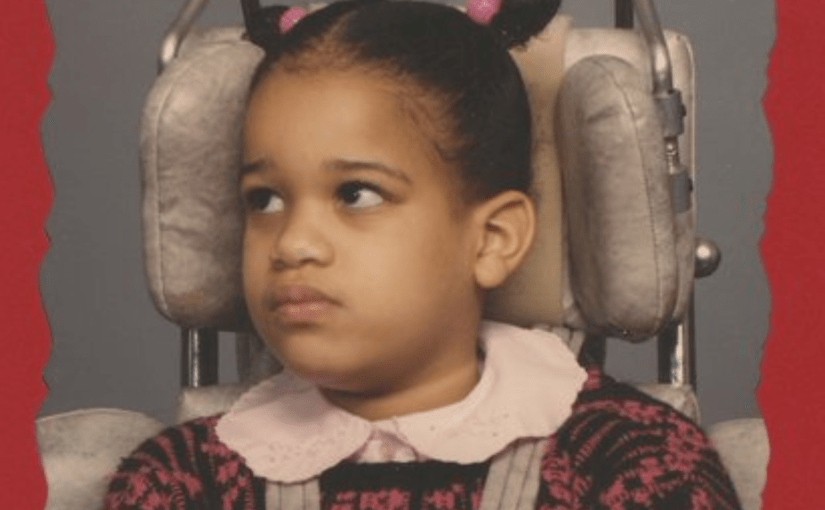
As I stood peering through my living room window, I could see people going about their lives as though it was an ordinary day.  At that time, I couldn’t understand how everything outside seemed so normal when it should have stopped the way my world did. Everything had come crashing down in a pile of rubble. I was in one of the worst nightmares imaginable.  I couldn’t wake up from this.  It wasn’t a dream.  It was reality.  My child was dead.

I realize that people die every day and life goes on for all of the rest of us.  In my case, I wondered why a loving parent’s child could die, while horrendous parents can see their child live throughout their lifetime.  Of course I would never want anyone’s child to die.  Not even my worst enemy.  My point is that my precious Rachel was so deeply loved.  She had the best life possible for her.  Now it was all over in seemingly a flash. How could life just go on as though she were never here? I was inconsolable.

Memorial Planning While Grief-stricken

During that week my husband and I had to notify people that Rachel had passed away.  We had to make arrangements with a Funeral Director, write an obituary, decide how we wanted the Memorial service to be carried out, and what the menu would be for the luncheon afterwards. The way I was grieving over my beloved Rachel, I barely had the strength or mental capacity to do any of it.  All of this was a lot to expect from grief-stricken parents, yet it had to be done.

As heartbroken as I was because my child died, I somehow knew that the excruciating pain I was feeling was only the tip of the iceberg.  So much of what transpired during that time period was a blur to me. I didn’t remember much about the Memorial service, who was there or what people said to me afterwards.  A couple of days after Rachel’s funeral there was an article in the Akron Beacon Journal newspaper about Rachel’s memorial service.  That is how I know exactly what happened.

Totally Incapacitated by Grief

After the service I went home and retreated to my bedroom,  undressed and got into bed where I would stay for a solid week. I felt literally paralyzed by the pain. I kept a headache from constantly crying.  My eyes were almost swollen shut.  All of my strength was gone. The tsunami of pain I somehow sensed would be coming, had hit.  I only had the strength to go to the bathroom.  Nothing else.     

Thank God I had close friends who knew how much I loved Rachel and how devastated I was.  They cried with me.  They did their best to comfort and encourage me. They prayed and helped where assistance was needed. I didn’t have to ask. These loving actions were such a blessing.

After several days, a dear friend, who is a psychiatrist, suggested that I should think about getting professional help in order to move forward. It was obvious to my loved ones that I was incapacitated by grief and despair.

Professional Help Needed to Manage Grief

Although hesitant about the unknown, I heeded our friend’s advice and sought professional help. It was definitely the right advice and decision since I couldn’t pull myself out of the slump.  I couldn’t pray my way out of it either. As a Christian I chose a Christian psychiatrist. It was such a good choice.

I was not simply medicated and expected to talk about my feelings. My therapist stressed the importance of praying daily and reading encouraging scriptures from the bible, or a daily devotional. Our sessions were insightful and challenging. Combining all of the aforementioned placed me on solid ground and enabled me to move forward through the process of grieving my child’s death.

Some people think that a Christian should just pray and trust God to solve every problem supernaturally.  Some Christians believe that if a person needs some other assistance, that is a sign of a lack of faith and spirituality.  Sometimes the very person who says that, is wearing eyeglasses, has had surgery, or is on some type of daily medication. 

The same way they needed medical intervention, so does a person who needs emotional support.  A grief-stricken person cannot pray their way out of their situation any more than a person who needs a dentist, ophthalmologist or medical doctor can just pray their ailment away.  No matter who you are, a professional therapist is sometimes needed.

With love and therapy the pain of it all had somewhat dissipated.  I began to resume life in my new normal.  I answered phone calls and visits from friends. I felt like I was surrounded in a cocoon of loving support.  It strengthened me.  It eased my pain. That was until I left the safety of my home.

Words Can Help or Hurt the Grieving

Once I began to venture out and saw people that knew my daughter had passed away, I entered the surreal world of being a parent of a child who had died.  The inconsiderate things some people said to me were almost unbelievable, inconceivable. 

When someone dies, I know people can be at a loss for words.  When a child passes away, saying the right thing is probably much more difficult.  I’m sure people’s intent is to comfort the grieving parent; however, when a person is unsure about what to say, their statements can be more hurtful than helpful. Certain words said to me over and over by different people felt like salt in an open wound.

In terms of what not to say to a parent whose child has passed away, these are 5 things that should not be said.

5 DON’TS

  1. Please don’t say: “My mother, father, (fill in the blank) died and I know just how you feel.” No matter how close a person is to their parent, parents dying before their child is part of the cycle of life.  Unless you have had a child die, you don’t know, and don’t want to know the depth of this pain.  Even another parent of a child who passed away cannot say they know exactly how another grieving parent feels.  Circumstances make a difference.
  2. Please don’t start quoting scriptures or anecdotal idioms. People gave me all kinds of scripture that they felt might be uplifting, when in fact it had the opposite effect on me. Scripture is appropriate when given in the proper time and context. Ecclesiastes 3:1-8 clarifies that there is a specific time and season for everything. I believe the best scripture a person can be guided by in times of grief and loss is to weep with those who weep; and “mourn with those who mourn.” Romans 12:15b (NIV) No advice required.
  3. Please don’t say to a grieving parent that their child is in heaven and isn’t suffering any more.  My child may be in heaven, but my arms are empty.  My very soul is deeply troubled and wounded by an unimaginable depth of pain. People need to realize that “Singing cheerful songs to a person with a heavy heart is like… pouring vinegar in a wound.”  Proverbs 25:20 (NLT)  
  4. Please don’t say: “Everything happens for a reason so you should be over this by now.” Grief has no time limit. No matter how many years or decades have passed, a parent will forever love their child and carry the scars of that love lost.  
  5. Please don’t say: “At least you have another child or other children.”  Which one of your children that you love with all your heart and soul could fill the void left by the beloved child who passed away? A person who is trying to support someone in sorrow needs to know that even if some things are true, they are not helpful.  In fact, they are hurtful when a parent is sorrowful.

5 DO’s

If you want to be an encouragement to a parent whose child has passed away, here are 5 things you can say and do that could be a comfort:

  1.  Say “I’m so sorry for your loss.” Or “I love you.” Or “I’m praying for you.”  The fewer the words, the better.  There is less of a chance to hurt or offend.
  2. Sympathy cards and notes let a parent know that you are thinking about them.  Shortly after my daughter passed away, I received a full-page letter from a parent whose child had also passed away.  The letter really ministered to me because that mother seemed to know just what I needed.
  3. Be an attentive listener. Being silent can be uncomfortable for the consoler.  I assure you it is not for the parent.  Many times the parent may need to just talk about their child, or the circumstances surrounding their child’s death. However, if the parent asks a question, give a succinct answer.
  4.  Take cues from the parent.  Parents grieve differently.  Some parents want to talk about their child.  Some want to grieve privately so they need space.  The amount of contact you have with a grieving parent should be in line with how well you knew them before the tragedy.
  5. You can do, or give, something special if you want to memorialize their child. After my child passed away a couple we knew came over with a shovel and dirt and planted a beautiful flowering bush in Rachel’s honor.  Another person heard about Rachel and brought an incredibly special gift to honor Rachel.  It was a beautiful little girl with wings, holding a dove.  Words can not express how much I was encouraged and comforted by these actions.

There is No Quick Fix for Those Who Grieve

No matter what is said, or done, nothing can fix this.  Nothing will bring my child back to life.  Acts of kindness, compassion and support can help in the healing process.  Psalm 147:3 lets us know that the Lord heals the brokenhearted and binds up their wounds. Scars do remain. God does take away the sting of death and gives the grace to move on and enjoy life again.  Some days may be bittersweet, yet we do the best we can with what remains.

I received so much strength and comfort during the darkest time of my life.  I want to live out the scripture in 2 Corinthians 1:3-4  …God is our merciful Father and the source of all comfort.  He comforts us in all our troubles so that we can comfort others. When they are troubled, we will be able to give them the same comfort God has given us.”   (NLT).

God uses ordinary people to accomplish His purposes.  My heartfelt desire is to impart to others what has been poured into me.  Rachel’s life, and death mattered. Every child’s does.

What has been your experience when dealing with grief personally, or in regard to someone else?

What Does Mother’s Day Mean to You?

By Cynthia Cummings-Walker

The Upside of Mother’s Day

Mother’s Day is designed to be a day of celebration honoring motherhood and the influence mothers have on society.  It is a day which is celebrated (on different dates) in around 50 countries around the world.

In America, many preparations go into the celebration of Mother’s Day.  Family get togethers, gifts, flowers, cards, and all kinds of communications are a huge part of the Mother’s Day celebrations.  Mother’s Day is customarily a day when mothers can be treated like a queen and let other family members serve her.

For those who have a wonderful relationship with their mother, this is certainly a day to celebrate the love, guidance and sacrifices made by one’s mother.  When you are the mother, it can be such a rewarding experience that your child or children value you and show you appreciation on Mother’s Day.

The Downside of Mother’s Day

Mother’s Day is not a day for rejoicing and celebrating motherhood for everyone. There are those who see Mother’s Day from an entirely different perspective. Sadness, loss, stress, grief or regret can be the feelings experienced.  This depends on the relationship a person has, or had, with their mother, or child. For some, their mother is deceased, or their child has passed away.  Bereavement.

Many women who wanted to be a mother yet were unable to have a child can experience sadness on Mother’s Day because of what never was.

Perhaps a person is estranged from their mother, or child through irreconcilable differences, lifestyles, abuse, or challenging temperaments, whereby they suffer the pain of the loss of the relationship. Mother’s Day can be filled with regret about things that could have been handled differently.

Sometimes a child may forget to acknowledge their mother on Mother’s Day. It does not have to be due to willful neglect. The busyness of that child’s life on Mother’s Day, or other factors can be the culprit. Nothing personal.

7 Actions that can Improve the Mother’s Day Experience

  1. Look at photographs or other memorabilia depicting happier times that can bring a laugh or comfort you.
  2. If your mother or child has passed away, shed tears if you must, don’t feel guilty or think you have to be strong for others.
  3. When you feel vulnerable, try to surround yourself with people who understand what you are going through and will provide compassionate support and positivity.
  4. Be involved with activities or traditions that will distract from the specific celebration of Mother’s Day.
  5. Don’t interpret everything depicted on social media as though everyone, except you, are thoroughly enjoying the day. Avoidance of social media may be prudent.
  6. Try to focus on what you have versus concentrating on what is missing in your life.
  7. Try not to take the failings of others personally on Mother’s Day.  People’s actions are not necessarily about you. It could be about what they are dealing with that has nothing to do with you.

There are no pat answers about what to do, or not do.  Try different things to see what works for you when you are faced with holidays that are triggers, instead of celebratory. Mother’s Day is difficult for me because both my mother and my beloved daughter have passed away.  I try not to focus on what I’ve lost. I make the best of what remains and try to live a life of gratitude and praise for the many blessings in my life that I can enjoy if I choose to.

Psalms 147:3 says that God heals the brokenhearted and binds up their wounds. Whatever the wound, for whatever the reason, the Lord loves us and is willing to help those who pray to Him for peace and guidance. Things take time so be patient. Trust Him. It will come.

Whatever Mother’s Day means to you will most likely determine how you will experience it.  If it has been a day of sadness. I pray that you will find ways to experience joy in the midst of sorrow. Nonetheless, to all of the mothers out there, and those who have been in the role of a mother, I wish you a very happy, blessed and enjoyable Mother’s Day!

The Gift from God I Didn’t Want

by Cynthia Cummings-Walker

Psalm 127:3 says Behold, children are a gift of the Lord, The fruit of the womb is a reward.” Really? My husband and I had prayed for a normal, healthy baby, yet received one that was defective and sick. I was not merely disappointed with my gift from God; I was absolutely devastated by it.

When Rachel Rebekah was born, after a quick count of her fingers and toes I took a sigh of relief. She was perfect and absolutely gorgeous.  This gift from God was in a perfectly wrapped physical package that we were so thankful for. However, within a couple of months I realized that Rachel was not the gift I wanted or had expected.   

The Gift Was Damaged

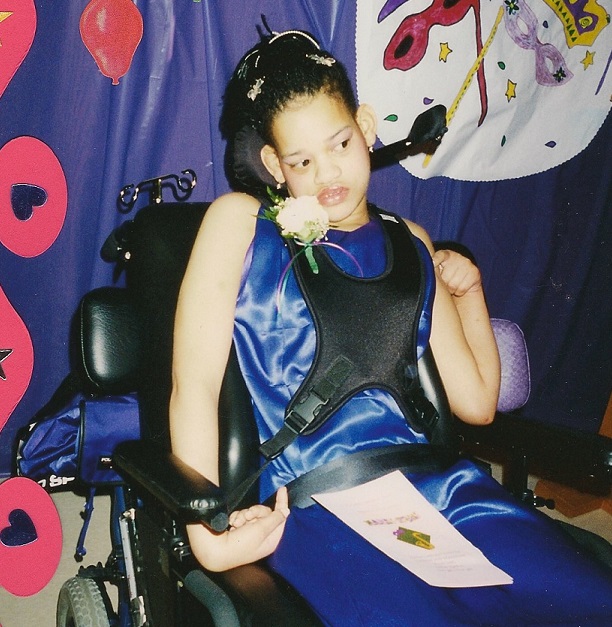
Although her physical growth was typical, her brain was not functioning properly.  Rachel was diagnosed with having multiple disabilities.  She was blind, hearing impaired, had cerebral palsy and a seizure disorder; was fed through a tube in her stomach; could not walk, talk, sit up, nor even respond to her name. Rachel was labeled “Chronic vegetative”.

People would say things to me like “God gave Rachel to you because you are a special person. Special people have special children.” Or, “God knew you were strong enough to handle it, so He gave Rachel to you.”  I didn’t want to be special. I didn’t want to be strong.  I wanted to be like every other mother who loved, nurtured and guided her child through life.

I was angry and depressed yet perfected my façade and nodded in agreement when people basically told me how blessed I was to have been “chosen” for this type of motherhood. It was easy for them to say this to me while they watched their child run around and play, graduate or get married. If I asked them if they would want to be so wonderfully blessed in this way, they would shrink back in horror at the thought of it all.

Regardless of the way my beloved Rachel Rebekah was, I loved her with all my heart and soul. I just couldn’t understand why a loving God would gift us with a precious baby girl who was destined to live incapacitated, medically fragile, unable to communicate, labeled, stared at and rejected. It was heartbreaking to think that Rachel would experience life’s pain, and little of its joys.  

Unanswered Prayer Finally Answered

For three solid years I begged and pleaded for God to heal Rachel.  It took a while, yet my prayers were finally answered. However, the answer was not what I expected. My gift would not be exchanged for a more desirable one through the physical healing of Rachel.  God’s plan was bigger than that, and more awesome than I could ever have imagined. 

One day as I was reading my Bible in the Book of John, Chapter 9, verses 1-3, I found answers.  “As Jesus was walking along, he saw a man who had been blind from birth.  “Rabbi,” his disciples asked him, “why was this man born blind? Was it because of his own sins or his parents’ sins?” “It was not because of his sins or his parents’ sins,” Jesus answered. “This happened so the power of God could be seen in him.”

This scripture resonated with me in that I realized just as God had a purpose for the blind man’s life, He had a perfectly designed plan and purpose for my beloved Rachel Rebekah. Her condition was not about anything we had done or not done.  It was about what God wanted to do through my precious baby girl’s life.

How could God be glorified through a child who was “Chronic vegetative”? I had no clue. I prayed for guidance and by faith did my part, trusting the Lord to do His.

From Grieving to Glorifying God

My grief and depression over the loss of a healthy, happy life for Rachel, shifted to finding out how the Lord would be glorified through her life. I stopped focusing on what was lost and concentrated on glorifying God through what remained. That prompted me to learn all I could about disabilities so that I could effectively advocate for Rachel. In advocating for others as well, my efforts began to be noticed on another level.

Newspaper articles were written about Rachel’s struggles and triumphs over a system that wanted to treat Rachel like a “disability” instead of a person, first. Trying to get them to see Rachel as the gift of God that she was, was like facing the armored Goliath with only a few rocks and a sling.

God’s awesome power was displayed in Rachel’s life by doing the seemingly impossible, allowing her to defeat the giant. Some disability policies and practices were forced to change on a systemic level. This benefitted countless people with disabilities. It was miraculous.

The miracle I wanted did not manifest as a physical or cognitive healing for my precious daughter. The miracle was in the Lord using Rachel to impact the lives of so many people locally, nationally, and internationally just the way she was.

Shortly after this photo was taken our beloved Rachel passed away from viral pneumonia. She was 21 years old.

Rachel’s Legacy Continues

Rachel’s death left me heartbroken, devastated and inconsolable. Yes, Rachel had a lot of suffering in her life. She also had joys that I didn’t think possible. We included her in so many things to normalize her life. She had a good life. When her assignment was over, she went to her heavenly home to be with our Lord and Savior Jesus Christ. Her work was done. Mine wasn’t.

Rachel’s legacy became one of me founding “Hope After Tragedy” a group for mothers whose child died. Because of all of the things I experienced as a grief-stricken mother, I believed I could comfort other mothers the way I was comforted. The uplifting interaction, encouragement and support amongst the bereaved mothers has been a blessing to me, and many others.

When Rachel’s life began, I didn’t want the “damaged gift” I was given. I wanted her to be perfectly normal. Initially I was blinded by the pain. Once my eyes were opened through reading the Bible and praying, I was able to see that God’s gift of Rachel was pure perfection. She was ordained to be the perfect person to accomplish God’s perfect plan. To God be the glory, great things He has done!

My Blog “Don’t Say That: 5 Do’s and Don’ts When a Child Dies” sheds light on what helps and what hurts the parents of a child who passed away.

Consider this:

If some situation in your life has devastated you, and you think the situation is hopeless, think again. There is life after death, or disaster, in what is left behind. Is there something you can do to repurpose your painful experience into something productive? It’s like the saying: “When life gives you lemons, make lemonade.” You may be surprised with what can be accomplished. I pray that the Lord will guide and strengthen you to accomplish His purpose for your life. God loves you. He really does!

I would really like to know how you repurposed your pain.

Is God Punishing Me?

By Cynthia Cummings-Walker

As I pondered the diagnosis, and what I had just been told, the pain of my thoughts was like a heated blade stabbing through my very heart and soul. Suddenly I heard sounds of loud, heart wrenching wails filling the air. I looked around to see who it was. There was no one else there. It was me. 

The all-encompassing pain I felt from this living nightmare was just too much to bear.  Every bit of physical strength I had drained out of my body.  I felt weak, and slowly slid to the floor. Words cannot express the depth of pain and anguish that ripped at my very soul as images of Rachel suffering for months, without relief, swirled around in my head.

Through bitter tears I wondered, how could God be a loving, merciful God and allow something so awful to happen?   Perhaps it wasn’t God’s fault. What if it was me?   

Was I Being Punished for Something?

I couldn’t help but wonder if this torture was some kind of punishment from God for something I had done. I started trying to remember everything I had ever done wrong to see if anything warranted this level of retribution from God.  I was far from perfect but couldn’t pinpoint anything.

Fast forwarding through my life, perhaps I had forgotten about something.  No, nothing there either.   I couldn’t remember anything drastic enough to cause what seemed to be severe punishment. No matter how irrational my thought process was, that is how I felt then, before I knew better.

Every day, people all over the world die, get in accidents, receive a devastating diagnosis, get betrayed, abandoned  by someone they love; or lose everything they have.  Death. Abuses. Tragedy. Evil.   All are a part of life.

No matter who you are, where you live, or what you have, misfortune will come knocking at your door at some point. One thing that may be easy to forget is that each person who dies is an individual, not just one of many.  They have families and loved ones who suffer and grieve.

Perspective Matters

I had to admit that when catastrophes befall others, I don’t assume that God is punishing them.  So why, when something horrendous happens to someone personally, they may think it is a punishment from God?  Even if I had done something terrible, God still would not hurt someone else to punish the perpetrator, me.

Perspective determines how a person will feel and act on what’s happening in their life. Two people can look at the same situation and see it entirely differently. In this case we are considering responses to tragedy and loss.

Let’s say that there is a drinking glass on a table that has liquid in it to the middle of the glass.  Some people see the glass as half full, while others see it as half empty. Some people go through life with a half empty glass as a victim. While the ones who see the glass half full will be more positive about life and are more likely to live as a victor.

I understand that during a crisis a person can be blindsided by the pain.  They don’t want to think about what good can come out of their situation.  They just want things back the way they used to be no matter how it was.

Self-Induced Misery is Not Punishment

There is no need for God to punish a person who makes perpetually foolish decisions. The consequences of their actions cause misery that is self-induced. When a person fails to take personal responsibility for bad decisions, it is easier to blame someone else, or claim that God is punishing them.

I’ve heard some people’s family members say that God is punishing them by taking their loved one away. Not true. For instance, if a person chooses to be drug or alcohol addicted, has reckless behaviors or takes their own life, that is a consequence of personal choice.

My heart goes out to those who suffer because of these heart wrenching situations. I know they don’t want to blame the dead. God isn’t to blame either. God gives us all free will to live life as we please.

We can make decisions that benefit us, or ones that are detrimental. Even when a loved one passes away from something out of their control, that is not God punishing anyone. People get sick and die. Everyone is going to die one day.  No one gets out of here alive.

The more I thought about it, prayed, and studied the scriptures, I realized that God does not punish the innocent for the actions of the guilty. 

We Reap What We Sow

If God wanted to punish me, He had plenty of ways He could do it directly. God is a God of justice. It would be unjust for Him to punish the innocent for the actions of the guilty. Galatians 6:7 (NLT) “Don’t be misled—you cannot mock the justice of God. You will always harvest what you plant.”

In other words, we all will reap what we have sown, personally. My heart goes out to those who have culpability in situations that have caused great pain and regret. We can’t turn back the hands of time and change what happened. What can be done is to confess, repent, and learn from it.

God’s Objective is to Save, Not Punish

God is loving, merciful and forgiving.  Everything He does is right, and for our good.  We can’t tell God how to be God any more than our toddler can tell us how to be a parent. None of us has done everything right.  We all fall short.  We must trust God because He is God.  Our Sovereign, Omniscient, Omnipotent Lord.

When someone is grieving, the focus tends to be on what is lost, instead of acknowledging and appreciating what remains.  It takes time, yet it will come if the person desires it. Know and believe Scripture: “And we know that God causes everything to work together for the good of those who love God and are called according to his purpose for them.” Romans 8:28 (NLT)

Consider This

For God so loved the world, that He gave His only begotten Son, that whoever believes in Him shall not perish, but have eternal life.” John 3:16 (NASB)

When Mother’s Day Hurts

10 Things to Consider

By Cynthia Cummings-Walker

Mother’s Day is supposed to be a day of celebration, then why so much pain for some? Perhaps someone’s mother has passed away and the loss is still too great. Others suffer because they are the mother of a child who has passed away and the thought of celebrating motherhood would be impossible.

Either way, it is a loss that is intensified by a day to honor and celebrate mothers. A loving mother is certainly irreplaceable. They should be celebrated for all of the sacrifices, encouragement and care they gave their child. Most mothers are cherished in life and deeply mourned in death.

“Not a Mother” Hurts on Mother’s Day Too

Amidst all of the much-deserved honoring of a mother, past or present, there is another category of women who are hurting on Mother’s Day.  They are the ones who had a miscarriage, a baby stillborn; or are unable to birth a child even though they have tried everything possible to be a mother. They hurt too.

Someone asked me once if she was still a mother because her only child had passed away. My answer was emphatically yes!  A woman cannot “unbirth” her child. If a brother or sister passes away, they will always remain your sibling.  When parents pass away, they will always be your parent.

Grieving Should Be a Judgement Free Zone

When you are an adult child of a mother who passed away, some people may say that your mom lived a long life, and you should be thankful you had her for so long. When a mother is deeply loved, no matter how long she lived, the time seems far too short.

When a young mother passes away there may be many questions and few answers. The devastation left behind is enormous for the loved ones of that mother. The circumstances around a person’s death impacts the grief and can cause all kinds of emotions that may be detrimental to the process of moving forward in life. We can move pass it, not get over it.

Even when there is a role reversal wherein a mother needs to be cared for the way she took care of her child, the heartache and grief at the mother’s death is not diminished. It is not a relief. It is a heart wrenching loss.

No matter what the circumstance, all who grieve on Mother’s Day deserve the same acknowledgement of their loss.  Sometimes people are quick to judge who deserves what, and under what circumstance.  The intent here is to acknowledge everyone’s pain when Mother’s Day causes them to hurt. This includes both male and female mourners, young and the aged.

In my family we celebrate Mother’s Day by going out to dinner.  One Mother’s Day catered food was brought in so we could celebrate at our home.  After all of these years holidays are still bittersweet because our beloved Rachel is not here with us. If I need to shed a tear, I do.  If something is funny to me, I laugh. 

Emotions are complex so I don’t apologize for missing my daughter or have to pretend to be happy so everyone else can feel comfortable. My loved ones understand. They hurt too.

When Other Celebrations Hurt

If I am feeling extremely depressed around some special event, I probably will not attend. If it is really important that I go, I stay for a short period of time, then leave.

One year I was invited to a friend’s daughter’s high school graduation. It was just months after Rachel died, during her last year of high school. I really didn’t want to attend because it would intensify my loss. Because of the close relationship with my friend, I knew I should go to the celebration. I went and stayed a short period of time, then left. Sometimes when someone has been so close and supportive for years, a personal sacrifice on a day of celebration is necessary.

My friend understood why I couldn’t stay long. My presence was important because she was the best friend a person could want, and her family had been like family to mine. I prayed and asked the Lord for strength to be engaging with those in attendance without showing any sign of my pain. He answered that prayer. I was even able to enjoy seeing some people I hadn’t seen in a while.

This is why it is so important to have open communication with the people close to you, so they understand why you are hurting. My blog on the “Do’s and Don’ts, When a Child Dies” can be helpful to them. Everyone will not be amenable to the needs of those who suffer. That’s okay too. Find your “safe” people and safe places where you can be you, and do the best to enjoy what you can.

For those who may not be aware of what hurts, and what helps on Mother’s Day, here are 10 actions that can possibly alleviate some of the pain associated with the celebration of mothers.

What You Can Do for Those Who Hurt on Mother’s Day

  1. Acknowledge a person’s loss, letting them know you haven’t forgotten their loved one.
  2. Be a silent listener to someone who wants to talk about their loss.  
  3. Offer to get together for a meal, walk in the park, put flowers on a grave site, or any other helpful activity.
  4. Demonstrate a lot of love without judging, criticizing, or condemning the way someone grieves.
  5. Pray and ask God for wisdom in how to comfort those who are grieving because Mother’s Day hurts.

What You Can Do When Mother’s Day Is Hurtful for You

  1. Be kind to yourself.  Don’t feel guilty or feel you have to be strong for others.
  2. Write a letter to your loved one, expressing your feelings about the loss.
  3. Look at photographs of happier times and try to laugh a little.
  4. Think about what your mother or child would want you to do in their absence, and do it.
  5. Ignore the holiday or create new traditions, doing whatever brings you a semblance of peace or joy.

Grief is real and is expressed differently depending on who you are and what you have experienced.  There are no pat answers about what to do.  You can try different ways to help you find solace during holidays or celebrations.  If something is not working, try something else.

When the loved one’s passing is recent, doing these things can be much more difficult.  As times passes, moving forward in life gets somewhat easier although you will never just get over the death.

My mother has passed away and so has my daughter. I try to do the best I can with what remains. There is a reason why I am still here.  I try to live with purpose.  Trying to help others who are suffering has bought me a renewed sense of purpose and direction. I believe this honors my precious Rachel Rebekah. That is my prayer for you as well.