Does Prayer Really Change Things?

With the state of this nation, many people are wondering what in the world is going on. Despite Christians praying, there seems to be never ending economic issues, health issues, jobless issues, political issues, church issues, relationship issues, racial issues, and/or leadership issues, wars and rumors of war, that will not go away.

Jeremiah 33:3a says, “Call to Me, and I will answer you,… John 15:7 says, “If you abide in Me, and My words abide in you, ask whatever you wish, and it will be done for you.”

In response, Churches have been having prayer meetings, prayer groups, prayer partners, prayer rallies, bible studies on prayer and all kinds of activities wherein they are calling out to the Lord in obedience to scripture.

Some people go on fasts along with their prayers, believing that fasting expedites God’s answering prayer and giving victory over the problems. What more can Christians possibly do? What do you think is the problem?

Some blame the devil. Some blame a political party or the government. Some blame non-Christians’ sinful lifestyle. Who out there is responsible for God not answering a Christian’s call?  It’s not someone out there. It’s someone in here. Unrepentant Christians are the problem. Sin is the problem.

Sin Will Close God’s Ears to a Christian’s Prayer

We realize that God does not have ears. God is a Spirit. ‘Ears’ is an anthropomorphism used to ascribe human characteristics to God so that we can better understand what the Lord is conveying. The issue at hand is that unconfessed sin disrupts our communication with the Lord.

Isaiah 59:2 says: “But your iniquities have made a separation between you and your God, And your sins have hidden His face from you so that He does not hear.”

 So when you spread out your hands in prayer, I will hide My eyes from you; Yes, even though you multiply prayers, I will not listen..” Isaiah 1:15

Can we really expect God to listen to our prayers when we live a worldly lifestyle, or Christians that don’t spend time with the Lord reading, praying and meditating on scripture? What about those of us who don’t pray unless we need God to give us something or solve a problem? Authentic Christianity is about having a relationship with the Lord, not acting like He is there only for 911 emergencies.

Christians may think that going to church, bible studies and doing good things makes up for ignoring God outside of spiritual activities.  It does not. Living a life of rebellion against God and disobeying Scripture has severe consequences.  

1 Samuel 15:22–23 “ …“Has the Lord as much delight in burnt offerings and sacrifices As in obeying the voice of the Lord. Behold, to obey is better than sacrifice,… “For rebellion is as the sin of divination, And insubordination is as iniquity and idolatry. Because you have rejected the word of the Lord, He has also rejected you….”

Mistreating People Hinders Answers to Prayer

In Matthew 22:37-40 Jesus says that the most important commandment is that Christians love the Lord your God with all of your heart, soul, mind and strength and your neighbor as yourself. Everything Christians do should emanate out of love for God as we interact with people.

The Lord places the treatment of people above things like going to church or doing good deeds. “If I speak in the tongues of men or of angels, but do not have love, I am only a resounding gong or a clanging cymbal. If I have the gift of prophecy and can fathom all mysteries and all knowledge, and if I have a faith that can move mountains, but do not have love, I am nothing.” (I Corinthians 13:1-2) What Christian’s do for, or against people is for, or against God (Matthew 25:40-45).

Here in Isaiah, the people are asking God why He is not answering their prayers even though they are fasting and praying. This is how the Lord responds:

Isaiah 58:2-7 “For day after day they seek me out; they seem eager to know my ways, as if they were a nation that does what is right and has not forsaken the commands of its God.

They ask me for just decisions and seem eager for God to come near them.  ‘Why have we fasted,’ they say, ‘and you have not seen it? Why have we humbled ourselves, and you have not noticed?’

God answers: “Yet on the day of your fasting, you do as you please and exploit all your workers. Your fasting ends in quarreling and strife,….

You cannot fast as you do today and expect your voice to be heard on high.  

Is this the kind of fast I have chosen, only a day for a man to humble himself … Is that what you call a fast, a day acceptable to the Lord?”

This is the fasting that the Lord recognizes: “Is not this the kind of fasting I have chosen:

to loose the chains of injustice and untie the cords of the yoke,

to set the oppressed free and break every yoke?

“Is it not to share your food with the hungry and

to provide the poor wanderer with shelter—

when you see the naked, to clothe them,…?”

If a person says they are a ‘Christian’ yet hates people, they are not a Christian. They don’t know God. (1 John 4:7-8, and 1 John 4:20).

“This is how we know that we love the children of God: by loving God and carrying out His commands. In fact, this is love for God: to keep His commands; And His commands are not burdensome,” I John 5:2-3

Repentance and Obedience Opens God’s Ears

2 Chronicles 7:14 “If My people who are called by My name humble themselves and pray and seek My face and turn from their wicked ways, then I will hear from heaven, will forgive their sin and will heal their land.”

Isaiah 1:16-17  “Wash and make yourselves clean. Take your evil deeds out of my sight! Stop doing wrong,  learn to do right! Seek justice, encourage the oppressed…”.   

Isaiah 58:9-11

If you remove the yoke from your midst,

The pointing of the finger and speaking wickedness,  

And if you give yourself to the hungry

And satisfy the desire of the afflicted,

Then your light will rise in darkness And your gloom will become like midday….

the Lord will continually guide you,

And satisfy your desire in scorched places,

And give strength to your bones;

And you will be like a watered garden,

And like a spring of water whose waters do not fail”.”

In Conclusion

Christian’s have a choice of whether or not they want to live a life of obedience to God. There are blessings for those who do: Psalm 128:1-2 says, “Blessed are all who fear the LORD, who walk in obedience to Him. You will eat the fruit of your labor, blessings and prosperity will be yours.”

And consequences for those who don’t. “Now all has been heard; here is the conclusion of the matter: Fear God and keep his commandments, for this is the duty of all mankind. For God will bring every deed into judgement, including every hidden thing,….” Ecclesiastes 12:13-14

Therefore, for any pseudo-Christians who want to ignore God through hate instead of love, oppress, imprison, judge, malign, abuse, ignore, deny justice to, and withhold from, when you are commanded to help, you are on your own…just stop wasting your time praying because God is not listening. However….

1 John 1:9 says “That if we confess our sins, He is faithful and just to forgive us our sins and to cleanse us from all unrighteousness.”

The Gift from God I Didn’t Want

by Cynthia Cummings-Walker

Psalm 127:3 says Behold, children are a gift of the Lord, The fruit of the womb is a reward.” Really? My husband and I had prayed for a normal, healthy baby, yet received one that was defective and sick. I was not merely disappointed with my gift from God; I was absolutely devastated by it.

When Rachel Rebekah was born, after a quick count of her fingers and toes I took a sigh of relief. She was perfect and absolutely gorgeous.  This gift from God was in a perfectly wrapped physical package that we were so thankful for. However, within a couple of months I realized that Rachel was not the gift I wanted or had expected.   

The Gift Was Damaged

Although her physical growth was typical, her brain was not functioning properly.  Rachel was diagnosed with having multiple disabilities.  She was blind, hearing impaired, had cerebral palsy and a seizure disorder; was fed through a tube in her stomach; could not walk, talk, sit up, nor even respond to her name. Rachel was labeled “Chronic vegetative”.

People would say things to me like “God gave Rachel to you because you are a special person. Special people have special children.” Or, “God knew you were strong enough to handle it, so He gave Rachel to you.”  I didn’t want to be special. I didn’t want to be strong.  I wanted to be like every other mother who loved, nurtured and guided her child through life.

I was angry and depressed yet perfected my façade and nodded in agreement when people basically told me how blessed I was to have been “chosen” for this type of motherhood. It was easy for them to say this to me while they watched their child run around and play, graduate or get married. If I asked them if they would want to be so wonderfully blessed in this way, they would shrink back in horror at the thought of it all.

Regardless of the way my beloved Rachel Rebekah was, I loved her with all my heart and soul. I just couldn’t understand why a loving God would gift us with a precious baby girl who was destined to live incapacitated, medically fragile, unable to communicate, labeled, stared at and rejected. It was heartbreaking to think that Rachel would experience life’s pain, and little of its joys.  

Unanswered Prayer Finally Answered

For three solid years I begged and pleaded for God to heal Rachel.  It took a while, yet my prayers were finally answered. However, the answer was not what I expected. My gift would not be exchanged for a more desirable one through the physical healing of Rachel.  God’s plan was bigger than that, and more awesome than I could ever have imagined. 

One day as I was reading my Bible in the Book of John, Chapter 9, verses 1-3, I found answers.  “As Jesus was walking along, he saw a man who had been blind from birth.  “Rabbi,” his disciples asked him, “why was this man born blind? Was it because of his own sins or his parents’ sins?” “It was not because of his sins or his parents’ sins,” Jesus answered. “This happened so the power of God could be seen in him.”

This scripture resonated with me in that I realized just as God had a purpose for the blind man’s life, He had a perfectly designed plan and purpose for my beloved Rachel Rebekah. Her condition was not about anything we had done or not done.  It was about what God wanted to do through my precious baby girl’s life.

How could God be glorified through a child who was “Chronic vegetative”? I had no clue. I prayed for guidance and by faith did my part, trusting the Lord to do His.

From Grieving to Glorifying God

My grief and depression over the loss of a healthy, happy life for Rachel, shifted to finding out how the Lord would be glorified through her life. I stopped focusing on what was lost and concentrated on glorifying God through what remained. That prompted me to learn all I could about disabilities so that I could effectively advocate for Rachel. In advocating for others as well, my efforts began to be noticed on another level.

Newspaper articles were written about Rachel’s struggles and triumphs over a system that wanted to treat Rachel like a “disability” instead of a person, first. Trying to get them to see Rachel as the gift of God that she was, was like facing the armored Goliath with only a few rocks and a sling.

God’s awesome power was displayed in Rachel’s life by doing the seemingly impossible, allowing her to defeat the giant. Some disability policies and practices were forced to change on a systemic level. This benefitted countless people with disabilities. It was miraculous.

The miracle I wanted did not manifest as a physical or cognitive healing for my precious daughter. The miracle was in the Lord using Rachel to impact the lives of so many people locally, nationally, and internationally just the way she was.

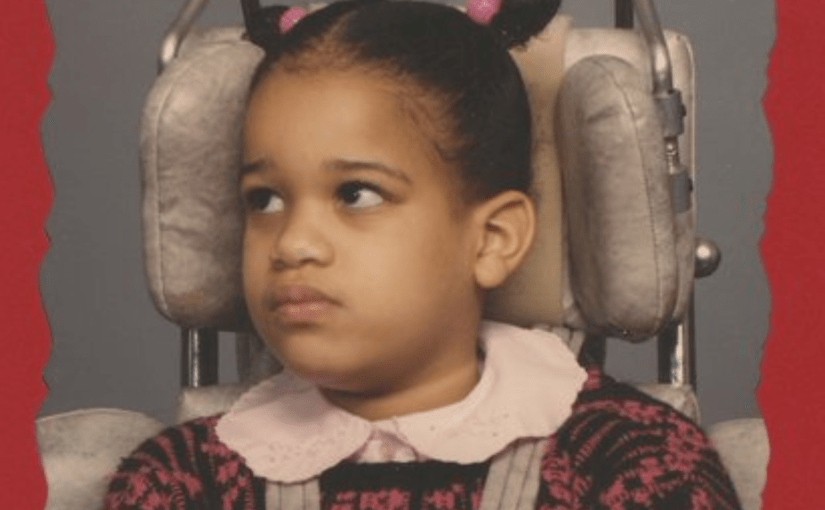
Shortly after this photo was taken our beloved Rachel passed away from viral pneumonia. She was 21 years old.

Rachel’s Legacy Continues

Rachel’s death left me heartbroken, devastated and inconsolable. Yes, Rachel had a lot of suffering in her life. She also had joys that I didn’t think possible. We included her in so many things to normalize her life. She had a good life. When her assignment was over, she went to her heavenly home to be with our Lord and Savior Jesus Christ. Her work was done. Mine wasn’t.

Rachel’s legacy became one of me founding “Hope After Tragedy” a group for mothers whose child died. Because of all of the things I experienced as a grief-stricken mother, I believed I could comfort other mothers the way I was comforted. The uplifting interaction, encouragement and support amongst the bereaved mothers has been a blessing to me, and many others.

When Rachel’s life began, I didn’t want the “damaged gift” I was given. I wanted her to be perfectly normal. Initially I was blinded by the pain. Once my eyes were opened through reading the Bible and praying, I was able to see that God’s gift of Rachel was pure perfection. She was ordained to be the perfect person to accomplish God’s perfect plan. To God be the glory, great things He has done!

My Blog “Don’t Say That: 5 Do’s and Don’ts When a Child Dies” sheds light on what helps and what hurts the parents of a child who passed away.

Consider this:

If some situation in your life has devastated you, and you think the situation is hopeless, think again. There is life after death, or disaster, in what is left behind. Is there something you can do to repurpose your painful experience into something productive? It’s like the saying: “When life gives you lemons, make lemonade.” You may be surprised with what can be accomplished. I pray that the Lord will guide and strengthen you to accomplish His purpose for your life. God loves you. He really does!

I would really like to know how you repurposed your pain.

Is God Punishing Me?

By Cynthia Cummings-Walker

As I pondered the diagnosis, and what I had just been told, the pain of my thoughts was like a heated blade stabbing through my very heart and soul. Suddenly I heard sounds of loud, heart wrenching wails filling the air. I looked around to see who it was. There was no one else there. It was me. 

The all-encompassing pain I felt from this living nightmare was just too much to bear.  Every bit of physical strength I had drained out of my body.  I felt weak, and slowly slid to the floor. Words cannot express the depth of pain and anguish that ripped at my very soul as images of Rachel suffering for months, without relief, swirled around in my head.

Through bitter tears I wondered, how could God be a loving, merciful God and allow something so awful to happen?   Perhaps it wasn’t God’s fault. What if it was me?   

Was I Being Punished for Something?

I couldn’t help but wonder if this torture was some kind of punishment from God for something I had done. I started trying to remember everything I had ever done wrong to see if anything warranted this level of retribution from God.  I was far from perfect but couldn’t pinpoint anything.

Fast forwarding through my life, perhaps I had forgotten about something.  No, nothing there either.   I couldn’t remember anything drastic enough to cause what seemed to be severe punishment. No matter how irrational my thought process was, that is how I felt then, before I knew better.

Every day, people all over the world die, get in accidents, receive a devastating diagnosis, get betrayed, abandoned  by someone they love; or lose everything they have.  Death. Abuses. Tragedy. Evil.   All are a part of life.

No matter who you are, where you live, or what you have, misfortune will come knocking at your door at some point. One thing that may be easy to forget is that each person who dies is an individual, not just one of many.  They have families and loved ones who suffer and grieve.

Perspective Matters

I had to admit that when catastrophes befall others, I don’t assume that God is punishing them.  So why, when something horrendous happens to someone personally, they may think it is a punishment from God?  Even if I had done something terrible, God still would not hurt someone else to punish the perpetrator, me.

Perspective determines how a person will feel and act on what’s happening in their life. Two people can look at the same situation and see it entirely differently. In this case we are considering responses to tragedy and loss.

Let’s say that there is a drinking glass on a table that has liquid in it to the middle of the glass.  Some people see the glass as half full, while others see it as half empty. Some people go through life with a half empty glass as a victim. While the ones who see the glass half full will be more positive about life and are more likely to live as a victor.

I understand that during a crisis a person can be blindsided by the pain.  They don’t want to think about what good can come out of their situation.  They just want things back the way they used to be no matter how it was.

Self-Induced Misery is Not Punishment

There is no need for God to punish a person who makes perpetually foolish decisions. The consequences of their actions cause misery that is self-induced. When a person fails to take personal responsibility for bad decisions, it is easier to blame someone else, or claim that God is punishing them.

I’ve heard some people’s family members say that God is punishing them by taking their loved one away. Not true. For instance, if a person chooses to be drug or alcohol addicted, has reckless behaviors or takes their own life, that is a consequence of personal choice.

My heart goes out to those who suffer because of these heart wrenching situations. I know they don’t want to blame the dead. God isn’t to blame either. God gives us all free will to live life as we please.

We can make decisions that benefit us, or ones that are detrimental. Even when a loved one passes away from something out of their control, that is not God punishing anyone. People get sick and die. Everyone is going to die one day.  No one gets out of here alive.

The more I thought about it, prayed, and studied the scriptures, I realized that God does not punish the innocent for the actions of the guilty. 

We Reap What We Sow

If God wanted to punish me, He had plenty of ways He could do it directly. God is a God of justice. It would be unjust for Him to punish the innocent for the actions of the guilty. Galatians 6:7 (NLT) “Don’t be misled—you cannot mock the justice of God. You will always harvest what you plant.”

In other words, we all will reap what we have sown, personally. My heart goes out to those who have culpability in situations that have caused great pain and regret. We can’t turn back the hands of time and change what happened. What can be done is to confess, repent, and learn from it.

God’s Objective is to Save, Not Punish

God is loving, merciful and forgiving.  Everything He does is right, and for our good.  We can’t tell God how to be God any more than our toddler can tell us how to be a parent. None of us has done everything right.  We all fall short.  We must trust God because He is God.  Our Sovereign, Omniscient, Omnipotent Lord.

When someone is grieving, the focus tends to be on what is lost, instead of acknowledging and appreciating what remains.  It takes time, yet it will come if the person desires it. Know and believe Scripture: “And we know that God causes everything to work together for the good of those who love God and are called according to his purpose for them.” Romans 8:28 (NLT)

Consider This

For God so loved the world, that He gave His only begotten Son, that whoever believes in Him shall not perish, but have eternal life.” John 3:16 (NASB)

When Mother’s Day Hurts

10 Things to Consider

By Cynthia Cummings-Walker

Mother’s Day is supposed to be a day of celebration, then why so much pain for some? Perhaps someone’s mother has passed away and the loss is still too great. Others suffer because they are the mother of a child who has passed away and the thought of celebrating motherhood would be impossible.

Either way, it is a loss that is intensified by a day to honor and celebrate mothers. A loving mother is certainly irreplaceable. They should be celebrated for all of the sacrifices, encouragement and care they gave their child. Most mothers are cherished in life and deeply mourned in death.

“Not a Mother” Hurts on Mother’s Day Too

Amidst all of the much-deserved honoring of a mother, past or present, there is another category of women who are hurting on Mother’s Day.  They are the ones who had a miscarriage, a baby stillborn; or are unable to birth a child even though they have tried everything possible to be a mother. They hurt too.

Someone asked me once if she was still a mother because her only child had passed away. My answer was emphatically yes!  A woman cannot “unbirth” her child. If a brother or sister passes away, they will always remain your sibling.  When parents pass away, they will always be your parent.

Grieving Should Be a Judgement Free Zone

When you are an adult child of a mother who passed away, some people may say that your mom lived a long life, and you should be thankful you had her for so long. When a mother is deeply loved, no matter how long she lived, the time seems far too short.

When a young mother passes away there may be many questions and few answers. The devastation left behind is enormous for the loved ones of that mother. The circumstances around a person’s death impacts the grief and can cause all kinds of emotions that may be detrimental to the process of moving forward in life. We can move pass it, not get over it.

Even when there is a role reversal wherein a mother needs to be cared for the way she took care of her child, the heartache and grief at the mother’s death is not diminished. It is not a relief. It is a heart wrenching loss.

No matter what the circumstance, all who grieve on Mother’s Day deserve the same acknowledgement of their loss.  Sometimes people are quick to judge who deserves what, and under what circumstance.  The intent here is to acknowledge everyone’s pain when Mother’s Day causes them to hurt. This includes both male and female mourners, young and the aged.

In my family we celebrate Mother’s Day by going out to dinner.  One Mother’s Day catered food was brought in so we could celebrate at our home.  After all of these years holidays are still bittersweet because our beloved Rachel is not here with us. If I need to shed a tear, I do.  If something is funny to me, I laugh. 

Emotions are complex so I don’t apologize for missing my daughter or have to pretend to be happy so everyone else can feel comfortable. My loved ones understand. They hurt too.

When Other Celebrations Hurt

If I am feeling extremely depressed around some special event, I probably will not attend. If it is really important that I go, I stay for a short period of time, then leave.

One year I was invited to a friend’s daughter’s high school graduation. It was just months after Rachel died, during her last year of high school. I really didn’t want to attend because it would intensify my loss. Because of the close relationship with my friend, I knew I should go to the celebration. I went and stayed a short period of time, then left. Sometimes when someone has been so close and supportive for years, a personal sacrifice on a day of celebration is necessary.

My friend understood why I couldn’t stay long. My presence was important because she was the best friend a person could want, and her family had been like family to mine. I prayed and asked the Lord for strength to be engaging with those in attendance without showing any sign of my pain. He answered that prayer. I was even able to enjoy seeing some people I hadn’t seen in a while.

This is why it is so important to have open communication with the people close to you, so they understand why you are hurting. My blog on the “Do’s and Don’ts, When a Child Dies” can be helpful to them. Everyone will not be amenable to the needs of those who suffer. That’s okay too. Find your “safe” people and safe places where you can be you, and do the best to enjoy what you can.

For those who may not be aware of what hurts, and what helps on Mother’s Day, here are 10 actions that can possibly alleviate some of the pain associated with the celebration of mothers.

What You Can Do for Those Who Hurt on Mother’s Day

  1. Acknowledge a person’s loss, letting them know you haven’t forgotten their loved one.
  2. Be a silent listener to someone who wants to talk about their loss.  
  3. Offer to get together for a meal, walk in the park, put flowers on a grave site, or any other helpful activity.
  4. Demonstrate a lot of love without judging, criticizing, or condemning the way someone grieves.
  5. Pray and ask God for wisdom in how to comfort those who are grieving because Mother’s Day hurts.

What You Can Do When Mother’s Day Is Hurtful for You

  1. Be kind to yourself.  Don’t feel guilty or feel you have to be strong for others.
  2. Write a letter to your loved one, expressing your feelings about the loss.
  3. Look at photographs of happier times and try to laugh a little.
  4. Think about what your mother or child would want you to do in their absence, and do it.
  5. Ignore the holiday or create new traditions, doing whatever brings you a semblance of peace or joy.

Grief is real and is expressed differently depending on who you are and what you have experienced.  There are no pat answers about what to do.  You can try different ways to help you find solace during holidays or celebrations.  If something is not working, try something else.

When the loved one’s passing is recent, doing these things can be much more difficult.  As times passes, moving forward in life gets somewhat easier although you will never just get over the death.

My mother has passed away and so has my daughter. I try to do the best I can with what remains. There is a reason why I am still here.  I try to live with purpose.  Trying to help others who are suffering has bought me a renewed sense of purpose and direction. I believe this honors my precious Rachel Rebekah. That is my prayer for you as well.


Lessons From a Bird: Being Content with God’s Provision

By Cynthia Cummings-Walker

For a couple of days, a beautiful bright red cardinal kept flying into my window that faces the patio.  I didn’t know why and was concerned that it would injure itself.  After a couple of days I realized that the bird was trying to fly to the red flowering Canna plant I have just inside that window.

The bird completely ignored the birdfeeders, birdbath, and urns of beautiful flowers blooming all around the patio.  None of that seemed to matter.  The bird was determined to get to the Canna through that window, although it was closed.

The Cardinal did not realize that in being outside, it had the freedom to fly anywhere it wanted to go.  It could travel to places where it could enjoy a variety of flowers and food.  Being around other birds the Cardinal could find a mate.  

Many people are like the Cardinal. The Lord has provided us with everything we need, and much of what we desire. When lust for something that looks more appealing sets in, we may become dissatisfied, ignoring what we have and go after that which is unreachable.  Sometimes to our own detriment. 

In Genesis chapters 2 and 3 is the biblical account of Adam and Eve in the Garden of Eden.  God had provided the most beautiful garden that anyone could possibly imagine. Adam and Eve did not have to plant anything nor toil to maintain its beauty.  There were no weeds.  A mist came up from the ground to water it.  There was little to do except enjoy it.

The trees there were exceptionally lush and stunning to look at and countless fruit trees to eat from.  There was only one restriction. God told Adam and Eve they could eat fruit from any tree in the garden, except one.  It was the tree of the knowledge of good and evil located in the middle of the garden.

Adam and Eve had a close and personal relationship with God.  They lived in a beautiful, perfect environment. What more could they want?

One day Satan approached Eve and asked her why she was not eating from the tree of the knowledge of good and evil.  Eve said that God told them they could not eat from that tree.  If they ate from it they would surely die.

Satan told Eve that what God said was not true and if they ate from the tree they would not surely die. He said God was restricting them from that tree because if they ate from it their eyes would be opened and they would be like God, knowing good and evil.  

Eve was tempted to disobey God, blinded by the lust for something that was forbidden. She erroneously felt that God was withholding something better than she already had.  Eve ignored the lush and beautiful garden she lived in and focused on what she was closed out from having.

It was like the Cardinal wanting to get to the Canna. Eve succumbed to the temptation and ate a piece of fruit from the forbidden tree and gave some to Adam. This was a disastrous decision. It probably took less than a minute to make, yet one that brought irreparable damage to Adam and Eve and their relationship with God. 

The result of their disobedience destroyed their entire way of life. The penalty for Adam and Eve’s disobedience caused God to remove them from the garden and banned them from ever returning. 

The far-reaching consequences were that Adam would have to work by the sweat of his brow for the rest of his life. Eve would have to suffer labor pains in childbirth. Their son Cain would kill their other son Abel.  Of course, they had no idea of the price they would have to pay for being ungrateful and disobedient. Do we?

Things may look tempting and good from the outside looking in. The Master Gardener has a reason for closing a door or window. Even though the Cardinal was intent on entering my home for the flowering plant through the window, I restricted its entry and the window remained closed. 

Unbeknownst to the bird, if it had managed to get inside, it would be paying a high price.  It’s freedom to enjoy all of nature would be gone, and it would be restricted to one flower in an atmosphere which is not conducive to the bird’s intended purpose, nor its survival.

2 LESSONS TO BE LEARNED FROM THE CARDINAL

  1. In life, learn to be content with God’s provisions and enjoy what you currently have. The door or window may be closed for a reason. When the Lord has something for you, you will have access to it in God’s time.  Pray and wait.  
  2. Trust God. He is good.  Everything the Lord does is right and done for our good.  God has reasons for restrictions. Some things may be detrimental to us, or it is just not the right time. If we try to force our way in, that can cause self-induced misery, or worse.

As for the Cardinal, it kept flying into the window until I realized why the bird was doing it and moved the Canna to another spot where the bird could not see it. The Cardinal then refocused and enjoyed the provisions outside where it was. Once it is consistently warm outside at night, I will put the Cannas outside and the Cardinal can enjoy them then. 

Disaster can be borne out of haste. Good things come to those who wait.

Have you ever made a decision in haste and regretted it?

Do you, when God does not answer a prayer the way you want Him to, patiently wait, trusting that He knows what is best?