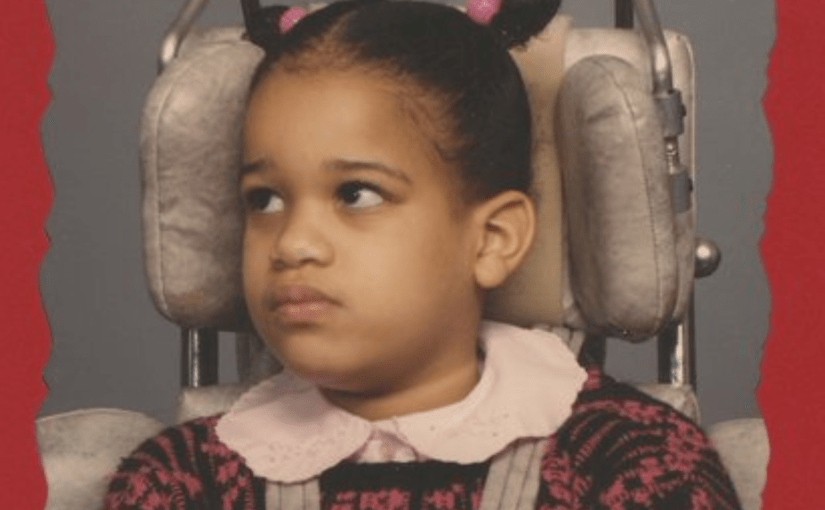
The Gift from God I Didn’t Want

by Cynthia Cummings-Walker

Psalm 127:3 says Behold, children are a gift of the Lord, The fruit of the womb is a reward.” Really? My husband and I had prayed for a normal, healthy baby, yet received one that was defective and sick. I was not merely disappointed with my gift from God; I was absolutely devastated by it.

When Rachel Rebekah was born, after a quick count of her fingers and toes I took a sigh of relief. She was perfect and absolutely gorgeous.  This gift from God was in a perfectly wrapped physical package that we were so thankful for. However, within a couple of months I realized that Rachel was not the gift I wanted or had expected.   

The Gift Was Damaged

Although her physical growth was typical, her brain was not functioning properly.  Rachel was diagnosed with having multiple disabilities.  She was blind, hearing impaired, had cerebral palsy and a seizure disorder; was fed through a tube in her stomach; could not walk, talk, sit up, nor even respond to her name. Rachel was labeled “Chronic vegetative”.

People would say things to me like “God gave Rachel to you because you are a special person. Special people have special children.” Or, “God knew you were strong enough to handle it, so He gave Rachel to you.”  I didn’t want to be special. I didn’t want to be strong.  I wanted to be like every other mother who loved, nurtured and guided her child through life.

I was angry and depressed yet perfected my façade and nodded in agreement when people basically told me how blessed I was to have been “chosen” for this type of motherhood. It was easy for them to say this to me while they watched their child run around and play, graduate or get married. If I asked them if they would want to be so wonderfully blessed in this way, they would shrink back in horror at the thought of it all.

Regardless of the way my beloved Rachel Rebekah was, I loved her with all my heart and soul. I just couldn’t understand why a loving God would gift us with a precious baby girl who was destined to live incapacitated, medically fragile, unable to communicate, labeled, stared at and rejected. It was heartbreaking to think that Rachel would experience life’s pain, and little of its joys.  

Unanswered Prayer Finally Answered

For three solid years I begged and pleaded for God to heal Rachel.  It took a while, yet my prayers were finally answered. However, the answer was not what I expected. My gift would not be exchanged for a more desirable one through the physical healing of Rachel.  God’s plan was bigger than that, and more awesome than I could ever have imagined. 

One day as I was reading my Bible in the Book of John, Chapter 9, verses 1-3, I found answers.  “As Jesus was walking along, he saw a man who had been blind from birth.  “Rabbi,” his disciples asked him, “why was this man born blind? Was it because of his own sins or his parents’ sins?” “It was not because of his sins or his parents’ sins,” Jesus answered. “This happened so the power of God could be seen in him.”

This scripture resonated with me in that I realized just as God had a purpose for the blind man’s life, He had a perfectly designed plan and purpose for my beloved Rachel Rebekah. Her condition was not about anything we had done or not done.  It was about what God wanted to do through my precious baby girl’s life.

How could God be glorified through a child who was “Chronic vegetative”? I had no clue. I prayed for guidance and by faith did my part, trusting the Lord to do His.

From Grieving to Glorifying God

My grief and depression over the loss of a healthy, happy life for Rachel, shifted to finding out how the Lord would be glorified through her life. I stopped focusing on what was lost and concentrated on glorifying God through what remained. That prompted me to learn all I could about disabilities so that I could effectively advocate for Rachel. In advocating for others as well, my efforts began to be noticed on another level.

Newspaper articles were written about Rachel’s struggles and triumphs over a system that wanted to treat Rachel like a “disability” instead of a person, first. Trying to get them to see Rachel as the gift of God that she was, was like facing the armored Goliath with only a few rocks and a sling.

God’s awesome power was displayed in Rachel’s life by doing the seemingly impossible, allowing her to defeat the giant. Some disability policies and practices were forced to change on a systemic level. This benefitted countless people with disabilities. It was miraculous.

The miracle I wanted did not manifest as a physical or cognitive healing for my precious daughter. The miracle was in the Lord using Rachel to impact the lives of so many people locally, nationally, and internationally just the way she was.
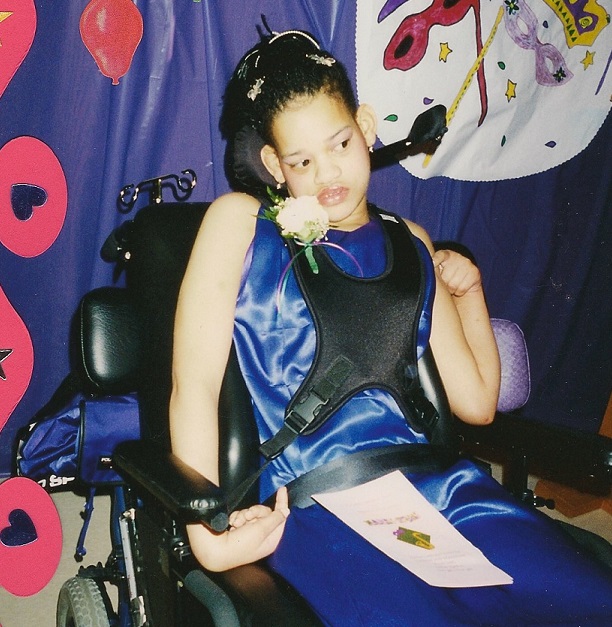
Shortly after this photo was taken our beloved Rachel passed away from viral pneumonia. She was 21 years old.

Rachel’s Legacy Continues

Rachel’s death left me heartbroken, devastated and inconsolable. Yes, Rachel had a lot of suffering in her life. She also had joys that I didn’t think possible. We included her in so many things to normalize her life. She had a good life. When her assignment was over, she went to her heavenly home to be with our Lord and Savior Jesus Christ. Her work was done. Mine wasn’t.

Rachel’s legacy became one of me founding “Hope After Tragedy” a group for mothers whose child died. Because of all of the things I experienced as a grief-stricken mother, I believed I could comfort other mothers the way I was comforted. The uplifting interaction, encouragement and support amongst the bereaved mothers has been a blessing to me, and many others.

When Rachel’s life began, I didn’t want the “damaged gift” I was given. I wanted her to be perfectly normal. Initially I was blinded by the pain. Once my eyes were opened through reading the Bible and praying, I was able to see that God’s gift of Rachel was pure perfection. She was ordained to be the perfect person to accomplish God’s perfect plan. To God be the glory, great things He has done!

My Blog “Don’t Say That: 5 Do’s and Don’ts When a Child Dies” sheds light on what helps and what hurts the parents of a child who passed away.

Consider this:

If some situation in your life has devastated you, and you think the situation is hopeless, think again. There is life after death, or disaster, in what is left behind. Is there something you can do to repurpose your painful experience into something productive? It’s like the saying: “When life gives you lemons, make lemonade.” You may be surprised with what can be accomplished. I pray that the Lord will guide and strengthen you to accomplish His purpose for your life. God loves you. He really does!

I would really like to know how you repurposed your pain.

When Mother’s Day Hurts

10 Things to Consider

By Cynthia Cummings-Walker

Mother’s Day is supposed to be a day of celebration, then why so much pain for some? Perhaps someone’s mother has passed away and the loss is still too great. Others suffer because they are the mother of a child who has passed away and the thought of celebrating motherhood would be impossible.

Either way, it is a loss that is intensified by a day to honor and celebrate mothers. A loving mother is certainly irreplaceable. They should be celebrated for all of the sacrifices, encouragement and care they gave their child. Most mothers are cherished in life and deeply mourned in death.

“Not a Mother” Hurts on Mother’s Day Too

Amidst all of the much-deserved honoring of a mother, past or present, there is another category of women who are hurting on Mother’s Day.  They are the ones who had a miscarriage, a baby stillborn; or are unable to birth a child even though they have tried everything possible to be a mother. They hurt too.

Someone asked me once if she was still a mother because her only child had passed away. My answer was emphatically yes!  A woman cannot “unbirth” her child. If a brother or sister passes away, they will always remain your sibling.  When parents pass away, they will always be your parent.

Grieving Should Be a Judgement Free Zone

When you are an adult child of a mother who passed away, some people may say that your mom lived a long life, and you should be thankful you had her for so long. When a mother is deeply loved, no matter how long she lived, the time seems far too short.

When a young mother passes away there may be many questions and few answers. The devastation left behind is enormous for the loved ones of that mother. The circumstances around a person’s death impacts the grief and can cause all kinds of emotions that may be detrimental to the process of moving forward in life. We can move pass it, not get over it.

Even when there is a role reversal wherein a mother needs to be cared for the way she took care of her child, the heartache and grief at the mother’s death is not diminished. It is not a relief. It is a heart wrenching loss.

No matter what the circumstance, all who grieve on Mother’s Day deserve the same acknowledgement of their loss.  Sometimes people are quick to judge who deserves what, and under what circumstance.  The intent here is to acknowledge everyone’s pain when Mother’s Day causes them to hurt. This includes both male and female mourners, young and the aged.

In my family we celebrate Mother’s Day by going out to dinner.  One Mother’s Day catered food was brought in so we could celebrate at our home.  After all of these years holidays are still bittersweet because our beloved Rachel is not here with us. If I need to shed a tear, I do.  If something is funny to me, I laugh. 

Emotions are complex so I don’t apologize for missing my daughter or have to pretend to be happy so everyone else can feel comfortable. My loved ones understand. They hurt too.

When Other Celebrations Hurt

If I am feeling extremely depressed around some special event, I probably will not attend. If it is really important that I go, I stay for a short period of time, then leave.

One year I was invited to a friend’s daughter’s high school graduation. It was just months after Rachel died, during her last year of high school. I really didn’t want to attend because it would intensify my loss. Because of the close relationship with my friend, I knew I should go to the celebration. I went and stayed a short period of time, then left. Sometimes when someone has been so close and supportive for years, a personal sacrifice on a day of celebration is necessary.

My friend understood why I couldn’t stay long. My presence was important because she was the best friend a person could want, and her family had been like family to mine. I prayed and asked the Lord for strength to be engaging with those in attendance without showing any sign of my pain. He answered that prayer. I was even able to enjoy seeing some people I hadn’t seen in a while.

This is why it is so important to have open communication with the people close to you, so they understand why you are hurting. My blog on the “Do’s and Don’ts, When a Child Dies” can be helpful to them. Everyone will not be amenable to the needs of those who suffer. That’s okay too. Find your “safe” people and safe places where you can be you, and do the best to enjoy what you can.

For those who may not be aware of what hurts, and what helps on Mother’s Day, here are 10 actions that can possibly alleviate some of the pain associated with the celebration of mothers.

What You Can Do for Those Who Hurt on Mother’s Day

  1. Acknowledge a person’s loss, letting them know you haven’t forgotten their loved one.
  2. Be a silent listener to someone who wants to talk about their loss.  
  3. Offer to get together for a meal, walk in the park, put flowers on a grave site, or any other helpful activity.
  4. Demonstrate a lot of love without judging, criticizing, or condemning the way someone grieves.
  5. Pray and ask God for wisdom in how to comfort those who are grieving because Mother’s Day hurts.

What You Can Do When Mother’s Day Is Hurtful for You

  1. Be kind to yourself.  Don’t feel guilty or feel you have to be strong for others.
  2. Write a letter to your loved one, expressing your feelings about the loss.
  3. Look at photographs of happier times and try to laugh a little.
  4. Think about what your mother or child would want you to do in their absence, and do it.
  5. Ignore the holiday or create new traditions, doing whatever brings you a semblance of peace or joy.

Grief is real and is expressed differently depending on who you are and what you have experienced.  There are no pat answers about what to do.  You can try different ways to help you find solace during holidays or celebrations.  If something is not working, try something else.

When the loved one’s passing is recent, doing these things can be much more difficult.  As times passes, moving forward in life gets somewhat easier although you will never just get over the death.

My mother has passed away and so has my daughter. I try to do the best I can with what remains. There is a reason why I am still here.  I try to live with purpose.  Trying to help others who are suffering has bought me a renewed sense of purpose and direction. I believe this honors my precious Rachel Rebekah. That is my prayer for you as well.


Moving from ‘Why’ to ‘What’: Transforming Tragedy Into Purpose

Lifeandbibleblog.com

by Cynthia Cummings-Walker

When I was given the bad news, at first I was in shock. All kinds of thoughts swirled around in my head.  I took a few deep breaths to calm the torrent of tears and confusion. I needed to be able to think clearly.  Decisions had to be made, but first I wanted to know “Why?” Why did my child die when so many others in the same situation lived?

Of course, I wouldn’t want anyone else’s loved one to die, I just wanted to know why mine didn’t live. I couldn’t help but compare myself to others who received miracles in hopeless situations.  Against all odds, some people survived when death was imminent, or an illness deemed incurable was cured. Why didn’t this happen in my case?  Not getting a miracle just like so many others wasn’t fair.  

Through a veil of excruciating pain and bitter tears I asked the “Why?” question over and over.  I prayed and pleaded for God to let me know why.  I believed that if the “Why” questions were answered, I would understand. Yet, to my chagrin, God remained silent. 

I was livid!  I was angry with people because of their actions or inaction.  I was angry with myself.  Perhaps if I had done something different this wouldn’t have happened. I was mad at everyone.  I was behaving as though mere mortals have the power of life and death in their hands.  Only God has that power. I was angry with Him too. Why didn’t He stop this from happening?

Would Knowing “Why” Change What Happened?

Eventually something dawned on me…if the “Why” questions were answered, and the results remained the same, knowing “Why” wouldn’t change a thing. My child would still be dead.  Knowing “Why” was useless. It had no pain relief attached to it.

This tragedy had left me feeling like I had fallen into a deep, dark pit. “Why” would not be the rope or ladder lifting me out.  My thought process had to change if I wanted to have peace. Demanding answers had gotten me nowhere.  I decided to ask the Lord for direction. Kind of “Not My will but Thine be done.

This opened-minded approach to dealing with tragedy would allow me to know what God wanted to do, verses what I wanted Him to do. Because the Bible is God’s primary communication to us, I turned there for clarity.

One day while reading I came across a story that made me look at my condition in a completely different light.   In John 5:5-9 there is a story of a man who had been ill for thirty-eight years.  When Jesus saw him lying on a mat,.. Jesus “said to him, Do you want to be made well?” What a strange question to ask someone who is incapacitated?  Even odder was the fact that the man didn’t say yes. Instead he said ““Sir, I have no man to put me into the pool when the water is stirred up; but while I am coming, another steps down before me.” (NKJV)  

I don’t know whether the man asked for help and was rejected, or whether he  didn’t ask anyone for help,  assuming that no one would want to help him. Whatever his reasoning, blaming others was getting him nowhere. The question Jesus asked, and the response from the infirmed man was not much different than mine back then.  

Was I remaining in this emotional pit because I was failing to do what it took to get out?  Was it easier for me to blame others, rather than taking responsibility for what I needed to do for myself to be healed? 

This self-examination prompted me to look deeper into my attitude and actions. Did I really want my broken heart healed?  Did I feel that if I tried to move forward enjoying life again, others might think that I didn’t really love my daughter? 

My identity had become the grieving mother. I had gotten comfortable being paralyzed by pain and making excuses for why I wasn’t moving forward. Even though the man on the mat did not say he wanted to be healed, Jesus healed him anyway.  The same for me.

Exchange the “Why” for “What Can I Do Now?”

“Why” would have to go and take its bitterness and despair with it.  “What” would take its place. I wondered what specific things I could do to move forward in life. I read books about people who used their pain and misfortunes to help others.  Some started organizations or support groups; dedicated playgrounds or planted trees in honor of their loved one. Others impacted lives by being a friend or mentor to someone who is struggling.  There are myriads of positive things that can be done.     

Getting out of that dark pit of despair into the world of possibilities changed my life exponentially.  As I heard the uplifting stories from others, and shared mine, my outlook on life brightened. My depression lifted. I didn’t have to feel guilty about enjoying life.  I was doing something worthwhile; something that in the long run honored my child.

“What” pulled me out of the pit of despair onto a seat of power.  Not power in the sense that I was anyone special.  The power was the ability to be a part of a process that would affect people’s lives for the better.

“What” took the focus off of me and placed it on to others. I had renewed strength and vitality. I felt an energy I hadn’t experienced in years.  I could genuinely laugh and smile again. It was amazing.  Whenever I felt sad, I would rebound quicker.

Are you stuck on the “Why” merry-go-round, always moving but going nowhere?  Do you really want to be well?  If so, there is hope. When you are ready to reach out to others, the small piece of rope you are barely holding on to can be transformed into a lifeline for someone who is sinking. None of this happens overnight, yet it can happen.

If you decide to exchange the “Why” for the “What” it can be transformative, taking you from debilitating pain to a renewed sense of hope and purpose.  Take the risk.  You may surprise yourself with the positive impact you can have on others. You just have to take it one step at a time.

Questions for Reflection

Are there positive things you can see that have come out of your tragedy?

Do you want to get well? If not, why do you think you should live in a perpetual state of grief and loss?