Transforming Grief: From ‘Why’ to ‘What Can I Do?’

Lifeandbibleblog.com

by Cynthia Cummings-Walker

When I was given the bad news, at first I was in shock. All kinds of thoughts swirled around in my head.  I took a few deep breaths to calm the torrent of tears and confusion. I needed to be able to think clearly.  Decisions had to be made, but first I wanted to know “Why?” Why did my child die when so many others in the same situation lived?

Of course, I wouldn’t want anyone else’s loved one to die, I just wanted to know why mine didn’t live. I couldn’t help but compare myself to others who received miracles in hopeless situations.  Against all odds, some people survived when death was imminent, or an illness deemed incurable was cured. Why didn’t this happen in my case?  Not getting a miracle just like so many others wasn’t fair.  

Through a veil of excruciating pain and bitter tears I asked the “Why?” question over and over.  I prayed and pleaded for God to let me know why.  I believed that if the “Why” questions were answered, I would understand. Yet, to my chagrin, God remained silent. 

I was livid!  I was angry with people because of their actions or inaction.  I was angry with myself.  Perhaps if I had done something different this wouldn’t have happened. I was mad at everyone.  I was behaving as though mere mortals have the power of life and death in their hands.  Only God has that power. I was angry with Him too. Why didn’t He stop this from happening?

Would Knowing “Why” Change What Happened?

Eventually something dawned on me…if the “Why” questions were answered, and the results remained the same, knowing “Why” wouldn’t change a thing. My child would still be dead.  Knowing “Why” was useless. It had no pain relief attached to it.

This tragedy had left me feeling like I had fallen into a deep, dark pit. “Why” would not be the rope or ladder lifting me out.  My thought process had to change if I wanted to have peace. Demanding answers had gotten me nowhere.  I decided to ask the Lord for direction. Kind of “Not My will but Thine be done.

This opened-minded approach to dealing with tragedy would allow me to know what God wanted to do, verses what I wanted Him to do. Because the Bible is God’s primary communication to us, I turned there for clarity.

One day while reading I came across a story that made me look at my condition in a completely different light.   In John 5:5-9 there is a story of a man who had been ill for thirty-eight years.  When Jesus saw him lying on a mat,.. Jesus “said to him, Do you want to be made well?” What a strange question to ask someone who is incapacitated?  Even odder was the fact that the man didn’t say yes. Instead he said ““Sir, I have no man to put me into the pool when the water is stirred up; but while I am coming, another steps down before me.” (NKJV)  

I don’t know whether the man asked for help and was rejected, or whether he  didn’t ask anyone for help,  assuming that no one would want to help him. Whatever his reasoning, blaming others was getting him nowhere. The question Jesus asked, and the response from the infirmed man was not much different than mine back then.  

Was I remaining in this emotional pit because I was failing to do what it took to get out?  Was it easier for me to blame others, rather than taking responsibility for what I needed to do for myself to be healed? 

This self-examination prompted me to look deeper into my attitude and actions. Did I really want my broken heart healed?  Did I feel that if I tried to move forward enjoying life again, others might think that I didn’t really love my daughter? 

My identity had become the grieving mother. I had gotten comfortable being paralyzed by pain and making excuses for why I wasn’t moving forward. Even though the man on the mat did not say he wanted to be healed, Jesus healed him anyway.  The same for me.

Exchange the “Why” for “What Can I Do Now?”

“Why” would have to go and take its bitterness and despair with it.  “What” would take its place. I wondered what specific things I could do to move forward in life. I read books about people who used their pain and misfortunes to help others.  Some started organizations or support groups; dedicated playgrounds or planted trees in honor of their loved one. Others impacted lives by being a friend or mentor to someone who is struggling.  There are myriads of positive things that can be done.     

Getting out of that dark pit of despair into the world of possibilities changed my life exponentially.  As I heard the uplifting stories from others, and shared mine, my outlook on life brightened. My depression lifted. I didn’t have to feel guilty about enjoying life.  I was doing something worthwhile; something that in the long run honored my child.

“What” pulled me out of the pit of despair onto a seat of power.  Not power in the sense that I was anyone special.  The power was the ability to be a part of a process that would affect people’s lives for the better.

“What” took the focus off of me and placed it on to others. I had renewed strength and vitality. I felt an energy I hadn’t experienced in years.  I could genuinely laugh and smile again. It was amazing.  Whenever I felt sad, I would rebound quicker.

Are you stuck on the “Why” merry-go-round, always moving but going nowhere?  Do you really want to be well?  If so, there is hope. When you are ready to reach out to others, the small piece of rope you are barely holding on to can be transformed into a lifeline for someone who is sinking. None of this happens overnight, yet it can happen.

If you decide to exchange the “Why” for the “What” it can be transformative, taking you from debilitating pain to a renewed sense of hope and purpose.  Take the risk.  You may surprise yourself with the positive impact you can have on others. You just have to take it one step at a time.

Questions for Reflection

Are there positive things you can see that have come out of your tragedy?

Do you want to get well? If not, why do you think you should live in a perpetual state of grief and loss?

Biologically There is No Such Thing as “Race” Part 2

by Cynthia Cummings-Walker
A Word to the Wise (lifeandbibleblog.com)

Deleterious Effects of a Race-based Social Construct

One time my husband was returning from a business trip where he had flown on the company’s private jet. On the way home once my husband entered our predominately White city, a police car pulled behind him. When my husband turned into the neighborhood we lived in, so did the police. When he turned into our cul de sac, the police turned in there also. Once the police saw our garage door begin to open, they circled around and left.

What a dichotomy. From private jet to suspect, all within an hour. This is not an indictment of police. It’s about a general perception of Black people who are living within a race-based social construct.  They can be perceived as guilty until proven innocent.

Because a Black person can’t have their Resume,  financial portfolio, and address clearly displayed at all times, they are generally seen as some type of menace. Problematic for some, deadly for others. 

Black people face situations daily that White people never even have had to think about. That is one reason it must seem incredulous to them when they hear certain scenarios about discriminatory practices.

Within this racially stratified culture, some White people make excuses for the mistreatment of Black people, saying they deserved it.  While other courageous White people have spoken out against racism and white supremacy.

One of the reasons I cherish my genuine White friends so much is because they know many of my experience first-hand.  They understand the plight of Black people. I never have to hear them make excuses or defend racism.   

From the wealthiest Black person to the poorest ones, they have shared experiences wherein no matter what level of education, wealth or fame achieved, Black people in society are inordinately portrayed and treated as though they are inherently genetically inferior, angry, and violent.

A Race-based social construct is very complex.  Currently, there is no easy way to dismantle it, yet there are steps that can be taken to quell its effects in the meantime.  It will have to be a journey just like so many other changes in society when people deem it so.

Personal Decisions Should Take Precedence over Other People’s Biases

I am not a victim of this Race-based social construct. I have many more advantages and opportunities than the enslaved Black people who initially came to America. They did not speak the language. They were deprived of their cultural norms. They were not permitted to learn to read or write. They were robbed of their dignity. They were treated inhumanly.

Nonetheless, freed Black people left plantations with only ragged clothes on their backs, yet with sheer brainpower, strength, courage, determination, and the help of abolitionists they survived, thrived, and excelled in every area that makes America one of the most advanced and prosperous nations in the world today. I walk in their footsteps, unfettered by obstacles and barriers.

My decisions determine how I live, not someone else’s biases. It really doesn’t matter what settings a person is born into. A person’s initial environment does not determine how their life will be lived; their decisions do. No environment guarantees failure or success. A person’s decisions determine that.

If a person is born into poverty, they don’t have to spend the rest of their lives there. They can rise above their circumstances. A basic education is free. Libraries are free. If the person excels in school, college scholarships are available which is almost free. There are mentors who can help guide a person who is tenacious and teachable. That person’s decisions will determine whether they win or lose.

On the other hand, a person born into wealth and privilege, does not have a guarantee of success. They can use their advantages wisely, or squander opportunities. They have a choice. Sadly, there are countless wealthy people who find themselves drug or alcohol addicted. Fortunately, there are all kinds of programs to help anyone with these struggles. Wealth couldn’t keep them from unnecessary pain and heartache. Better decisions could have.

I taught my children and grandchildren this concept: “Decisions Create Environment”. Their daily decisions will either give them options, or have privileges taken away. They have a choice. They must decide what they want the outcome of their actions to be now, and as adults. No matter what they are faced with, what they do about it is up to them. I pray that they always choose to overcome.

Moving Past Not being Racist to being for Anti-Racism  

I know that all White people do not embrace the ideology of superior and inferior “Races”.  They are not racist. However, in today’s society it is not enough for a person not to be racist. Another step is needed.

Some White people do not see their actions as racist because they do not say or do the obnoxious things that overtly racist people do. I understand. However, sometimes White people have an unconscious bias of which they are unaware. 

When another White person points out something that appears racist, it can be enlightening. Non-racist White people appreciate the insight when these things are brought to their attention by another White person. True racists reject the information and call, or label, the White person the opprobrious term a “N-word” lover.  

Many times, when a Black person mentions anything about racist words or actions, they are labeled as “pulling the race card”. I so appreciate the fact that my White friends understand the plight of Black people in America. They know that they have White privilege.  When necessary they use their privilege to make a difference in the lives of Black people, and others.  

I believe that one of the most effective ways a White person can help to quell overt racism is to say something. Perhaps it can make a difference and possibly lessen the humiliation a Black person may feel. I know that these acts have lessened my pain, and possibly enlighten the person who inflicted it.

Benefits of “If You See or Hear Something, Say Something”

  1. A White co-worker of mine who had recently moved to the area, attended a cocktail party where there were only White people present.  She was astonished at how freely people were using the N-word, joking about, and disparaging Black people.  When my friend couldn’t take it anymore, she raised her voice and said that her mother was Black and the conversations were very offensive. Although her mother was not Black, that was the only thing she could think of at the time to try to stop the overt racist conversation.  It did.
  2. A couple of Black friends and I were seated in a hotel restaurant for about 10 minutes without being waited on. A White couple, who came in after us, who had been waiting to be seated finally were given a booth.  Immediately the waiter went over to them to take their order. The man pointed out to the waiter that while waiting he noticed that we had been sitting there for a while without service and that the waiter should wait on us first.
  3. A White acquaintance of mine decided to be a waitress in an extremely popular restaurant in a predominantly White area where we lived.  During the training for new employees, they were told, “Don’t worry about giving Black people good service because they don’t give good tips.”  My neighbor was appalled, and asked, “If Black people get poor service, why should they leave a good tip?” She was told in so many words that Black people were not a priority there.  She walked out right then, never to return.
  4. Recently my husband and I were in a restaurant that required a reservation. We came in on time and were seated.  For about 10 minutes of watching everyone’s table being waited on except ours, and not even being able to make eye contact with a waiter, we got up to leave.  Before we could get to the door, a White Manager asked us why we were leaving.  We told her.  She asked us to return to the table and we would be waited on immediately.  She sent a waitress over that we had not seen that evening.  We received excellent service from that point on and a hefty discount.

This was an anti-racism action to me.  A teaching moment for waiters. We have been in restaurants with the same issue and no one questioned or cared if we walked out. 

White People and Black People Need to Develop Friendships

Some White people proclaim that they are not racist because they have a Black friend. For a White person to have a good relationship with a Black co-worker or neighbor does not prove that a person is not racist.  Usually, those relationships are cordial and superficial. W

I am not making a judgement here.  This is basically the American way.  When there are a couple of Black families in the neighborhood, or children in a school, that doesn’t really matter that they share the same space if they are devoid of personal relationships.

When a White person grows up in an all-White environment, lives in an all-White neighborhood, goes to all-White schools, White houses of worship in all faiths, attends all-White parties and celebrations from a child up, they have no opportunity to know Black people personally. They will primarily  rely on what they’ve been told by sources they trust.

A couple of years ago I was in an international Book club wherein we read and discussed the book “White Fragility” by Robin DiAngelo.  Robin is a White woman explaining from her own experiences why many White people perceive Black people the way they do. I learned so much from that book and diverse group discussions. 

What has been invaluable to me is White friends.  They individually have stood by me through thick and thin, and I, them. They have been true friends to me in every way.  We love each other.  My friends have gone into battles with me, encouraged me and fought for me.  They were willing to open those doors that I had no access to as a Black person.  The doors that were figuratively for “Whites only.”

A close friendship with people of diverse cultures and ethnicities is extremely important in closing the “racial” divide. I have benefited in ways that I would never have expected. Bottom line is that developing genuine personal relationships with Black people and others of diverse backgrounds can dispel myths on all sides.  Why not at least try it?

Continued in Part 3

The Value of Being Perfectly Imperfect

By Cynthia Cummings-Walker

My 11-year-old granddaughter was given some coins for a game she won.  As she looked at the quarters she realized that one was very different from the others.  The face of the quarter depicted George Washington, as usual, yet the back looked unique. 

My granddaughter decided to do some research on Coin websites.  She discovered that quarters, like the one she had, could be worth as much as $1,000.00.  However, the valuable quarter had to have a specific defect which would make it valuable. 

My granddaughter’s coin was perfectly shiny but did not have a flaw.  Therefore, it was only worth the 25 cents that average quarters are valued. A coin having a specific defect is what makes it so valuable.  It had to be imperfectly perfect.

The Illusion of Perfection

In today’s society, perfection appears to be the goal as a mark of achievement or value.  Men and women will have all kinds of cosmetic procedures performed in order to have the perfect face and body.   Some have died or are disfigured as a result of underqualified, or unqualified surgeons.

Celebrities themselves have admitted that they don’t really look like their professional photos.  Makeup, lighting, editing, and filters create the mirage of beautiful, perfect, beings. It is all a façade. If actors and models were so perfect there would be no need for the entertainment industry to use extras like body doubles, and hand models.

The Value of Imperfection

Years ago there was a mold that all models had to fit into. They had to be extremely thin and as perfect looking as possible.  Sometime later,  women came along who refused to change what seemed to be imperfections so that they could become top models. 

Cindy Crawford refused to have her facial mole removed.  Margot Hemmingway refused to have the gap in her teeth corrected.  Those imperfections are what caused them to stand out in the industry and they became supermodels.

Today, the standards in the entertainment industry have changed because those who do not fit into a “model mold” are the ones sought after.  There are prominent celebrities and models who would not have had a chance in the past.

Nowadays models can have vitiligo, facial scars, a missing limb, ambulism and all kinds of physical differences that make them interesting and different.  People today want uniqueness, not uniformity.

 Who Are you Trying to Please?

So many people are discontented with their physical appearance.  If their hair is curly, they want it straight.  If their skin color is dark they want to lighten it.  If their skin color is light they want to darken it.  Some want medical procedures to shrink an area, while others want medical procedures to enlarge something.

I am certainly not attempting to judge how people feel about themselves.  My concern is for those who are preoccupied with physical perfection as though it is the gateway to success and happiness.

Plenty of people who look perfect in face and body have turned to illegal drugs or even suicide because they are so unhappy. Their inner self is not in alignment with their outward appearance. 

Many people will invest all kinds of money in how they look and what they wear yet are bankrupt in terms of cultivating an inner beauty. 

Don’t be concerned about the outward beauty of fancy hairstyles, expensive jewelry, or beautiful clothes. You should clothe yourselves instead with the beauty that comes from within,….which is so precious to God.” 1 Peter 3:3–4 (NLT)

Cultivating inner beauty, integrity and character will take a person much further in life than a pretty face with a nasty attitude. “As a ring of gold in a swine’s snout So is a beautiful woman who lacks discretion.”  Proverbs 11:22 (NASB)

 Embrace being Perfectly Imperfect

Then God said, “Let Us make man in Our image, according to Our likeness;…”  God created man in His own image, in the image of God He created him; male and female He created them.  God blessed them;…” Genesis 1:26–28a (NASB)

Everything and everyone God created is perfect because we are created in His image and likeness regardless of any “imperfections” we may see in ourselves or others.

I do not believe that God created anyone “ugly”. As the saying goes: “Beauty is in the eye of the beholder.” Standards of beauty are generally determined within ethnicities, cultures, or society; all designed and created by God.   

People can reject someone based on their own personal reasons or prejudices, yet no one can stop God’s plan for your life.  Embrace who you are because you know whose you are. Do the best you can with what you have to work with. Improve what you can and embrace the rest.

Investing time in developing and maintaining a close relationship with the Lord has earthy benefits and eternal rewards.  When you trust God by believing what He says in His word, the Bible, your life will be filled with thanksgiving, praise, and gratitude for the life He has given you, imperfections, and all.

Trust in the Lord with all your heart And do not lean on your own understanding. In all your ways acknowledge Him, And He will make your paths straight.” Proverbs 3:5–6 (NASB)

Question for Reflection:  Have you ever considered this?:

For God so loved the world, that He gave His only begotten Son, that whoever believes in Him shall not perish, but have eternal life.” John 3:16 (NASB)

Believe.  Pray.  Read the Bible.  Trust.  Obey

The Gift from God I Didn’t Want

by Cynthia Cummings-Walker

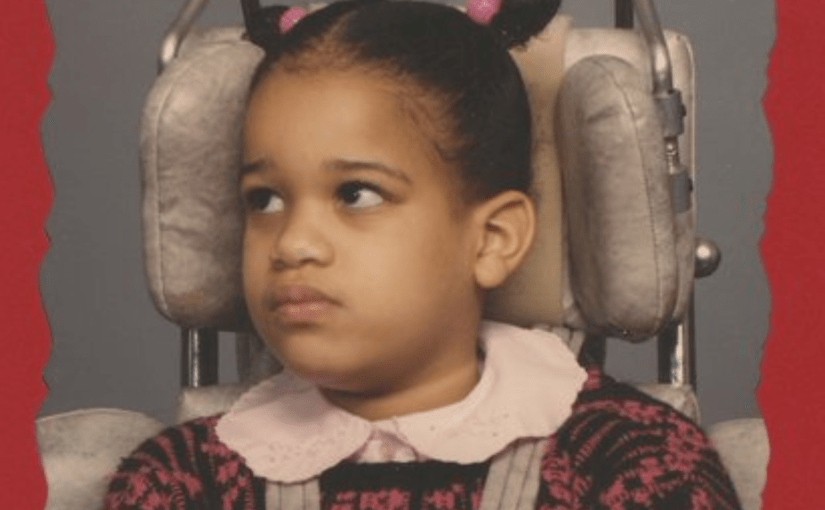
Psalm 127:3 says Behold, children are a gift of the Lord, The fruit of the womb is a reward.” Really? My husband and I had prayed for a normal, healthy baby, yet received one that was defective and sick. I was not merely disappointed with my gift from God; I was absolutely devastated by it.

When Rachel Rebekah was born, after a quick count of her fingers and toes I took a sigh of relief. She was perfect and absolutely gorgeous.  This gift from God was in a perfectly wrapped physical package that we were so thankful for. However, within a couple of months I realized that Rachel was not the gift I wanted or had expected.   

The Gift Was Damaged

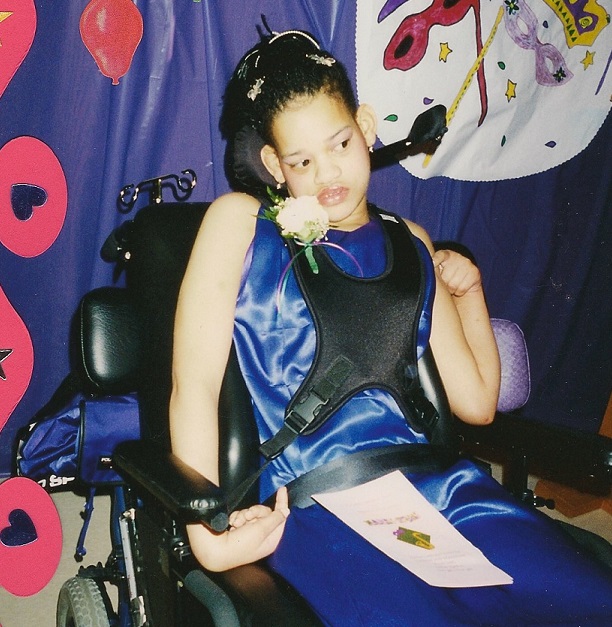
Although her physical growth was typical, her brain was not functioning properly.  Rachel was diagnosed with having multiple disabilities.  She was blind, hearing impaired, had cerebral palsy and a seizure disorder; was fed through a tube in her stomach; could not walk, talk, sit up, nor even respond to her name. Rachel was labeled “Chronic vegetative”.

People would say things to me like “God gave Rachel to you because you are a special person. Special people have special children.” Or, “God knew you were strong enough to handle it, so He gave Rachel to you.”  I didn’t want to be special. I didn’t want to be strong.  I wanted to be like every other mother who loved, nurtured and guided her child through life.

I was angry and depressed yet perfected my façade and nodded in agreement when people basically told me how blessed I was to have been “chosen” for this type of motherhood. It was easy for them to say this to me while they watched their child run around and play, graduate or get married. If I asked them if they would want to be so wonderfully blessed in this way, they would shrink back in horror at the thought of it all.

Regardless of the way my beloved Rachel Rebekah was, I loved her with all my heart and soul. I just couldn’t understand why a loving God would gift us with a precious baby girl who was destined to live incapacitated, medically fragile, unable to communicate, labeled, stared at and rejected. It was heartbreaking to think that Rachel would experience life’s pain, and little of its joys.  

Unanswered Prayer Finally Answered

For three solid years I begged and pleaded for God to heal Rachel.  It took a while, yet my prayers were finally answered. However, the answer was not what I expected. My gift would not be exchanged for a more desirable one through the physical healing of Rachel.  God’s plan was bigger than that, and more awesome than I could ever have imagined. 

One day as I was reading my Bible in the Book of John, Chapter 9, verses 1-3, I found answers.  “As Jesus was walking along, he saw a man who had been blind from birth.  “Rabbi,” his disciples asked him, “why was this man born blind? Was it because of his own sins or his parents’ sins?” “It was not because of his sins or his parents’ sins,” Jesus answered. “This happened so the power of God could be seen in him.”

This scripture resonated with me in that I realized just as God had a purpose for the blind man’s life, He had a perfectly designed plan and purpose for my beloved Rachel Rebekah. Her condition was not about anything we had done or not done.  It was about what God wanted to do through my precious baby girl’s life.

How could God be glorified through a child who was “Chronic vegetative”? I had no clue. I prayed for guidance and by faith did my part, trusting the Lord to do His.

From Grieving to Glorifying God

My grief and depression over the loss of a healthy, happy life for Rachel, shifted to finding out how the Lord would be glorified through her life. I stopped focusing on what was lost and concentrated on glorifying God through what remained. That prompted me to learn all I could about disabilities so that I could effectively advocate for Rachel. In advocating for others as well, my efforts began to be noticed on another level.

Newspaper articles were written about Rachel’s struggles and triumphs over a system that wanted to treat Rachel like a “disability” instead of a person, first. Trying to get them to see Rachel as the gift of God that she was, was like facing the armored Goliath with only a few rocks and a sling.

God’s awesome power was displayed in Rachel’s life by doing the seemingly impossible, allowing her to defeat the giant. Some disability policies and practices were forced to change on a systemic level. This benefitted countless people with disabilities. It was miraculous.

The miracle I wanted did not manifest as a physical or cognitive healing for my precious daughter. The miracle was in the Lord using Rachel to impact the lives of so many people locally, nationally, and internationally just the way she was.

Shortly after this photo was taken our beloved Rachel passed away from viral pneumonia. She was 21 years old.

Rachel’s Legacy Continues

Rachel’s death left me heartbroken, devastated and inconsolable. Yes, Rachel had a lot of suffering in her life. She also had joys that I didn’t think possible. We included her in so many things to normalize her life. She had a good life. When her assignment was over, she went to her heavenly home to be with our Lord and Savior Jesus Christ. Her work was done. Mine wasn’t.

Rachel’s legacy became one of me founding “Hope After Tragedy” a group for mothers whose child died. Because of all of the things I experienced as a grief-stricken mother, I believed I could comfort other mothers the way I was comforted. The uplifting interaction, encouragement and support amongst the bereaved mothers has been a blessing to me, and many others.

When Rachel’s life began, I didn’t want the “damaged gift” I was given. I wanted her to be perfectly normal. Initially I was blinded by the pain. Once my eyes were opened through reading the Bible and praying, I was able to see that God’s gift of Rachel was pure perfection. She was ordained to be the perfect person to accomplish God’s perfect plan. To God be the glory, great things He has done!

My Blog “Don’t Say That: 5 Do’s and Don’ts When a Child Dies” sheds light on what helps and what hurts the parents of a child who passed away.

Consider this:

If some situation in your life has devastated you, and you think the situation is hopeless, think again. There is life after death, or disaster, in what is left behind. Is there something you can do to repurpose your painful experience into something productive? It’s like the saying: “When life gives you lemons, make lemonade.” You may be surprised with what can be accomplished. I pray that the Lord will guide and strengthen you to accomplish His purpose for your life. God loves you. He really does!

I would really like to know how you repurposed your pain.

Is God Punishing Me?

By Cynthia Cummings-Walker

As I pondered the diagnosis, and what I had just been told, the pain of my thoughts was like a heated blade stabbing through my very heart and soul. Suddenly I heard sounds of loud, heart wrenching wails filling the air. I looked around to see who it was. There was no one else there. It was me. 

The all-encompassing pain I felt from this living nightmare was just too much to bear.  Every bit of physical strength I had drained out of my body.  I felt weak, and slowly slid to the floor. Words cannot express the depth of pain and anguish that ripped at my very soul as images of Rachel suffering for months, without relief, swirled around in my head.

Through bitter tears I wondered, how could God be a loving, merciful God and allow something so awful to happen?   Perhaps it wasn’t God’s fault. What if it was me?   

Was I Being Punished for Something?

I couldn’t help but wonder if this torture was some kind of punishment from God for something I had done. I started trying to remember everything I had ever done wrong to see if anything warranted this level of retribution from God.  I was far from perfect but couldn’t pinpoint anything.

Fast forwarding through my life, perhaps I had forgotten about something.  No, nothing there either.   I couldn’t remember anything drastic enough to cause what seemed to be severe punishment. No matter how irrational my thought process was, that is how I felt then, before I knew better.

Every day, people all over the world die, get in accidents, receive a devastating diagnosis, get betrayed, abandoned  by someone they love; or lose everything they have.  Death. Abuses. Tragedy. Evil.   All are a part of life.

No matter who you are, where you live, or what you have, misfortune will come knocking at your door at some point. One thing that may be easy to forget is that each person who dies is an individual, not just one of many.  They have families and loved ones who suffer and grieve.

Perspective Matters

I had to admit that when catastrophes befall others, I don’t assume that God is punishing them.  So why, when something horrendous happens to someone personally, they may think it is a punishment from God?  Even if I had done something terrible, God still would not hurt someone else to punish the perpetrator, me.

Perspective determines how a person will feel and act on what’s happening in their life. Two people can look at the same situation and see it entirely differently. In this case we are considering responses to tragedy and loss.

Let’s say that there is a drinking glass on a table that has liquid in it to the middle of the glass.  Some people see the glass as half full, while others see it as half empty. Some people go through life with a half empty glass as a victim. While the ones who see the glass half full will be more positive about life and are more likely to live as a victor.

I understand that during a crisis a person can be blindsided by the pain.  They don’t want to think about what good can come out of their situation.  They just want things back the way they used to be no matter how it was.

Self-Induced Misery is Not Punishment

There is no need for God to punish a person who makes perpetually foolish decisions. The consequences of their actions cause misery that is self-induced. When a person fails to take personal responsibility for bad decisions, it is easier to blame someone else, or claim that God is punishing them.

I’ve heard some people’s family members say that God is punishing them by taking their loved one away. Not true. For instance, if a person chooses to be drug or alcohol addicted, has reckless behaviors or takes their own life, that is a consequence of personal choice.

My heart goes out to those who suffer because of these heart wrenching situations. I know they don’t want to blame the dead. God isn’t to blame either. God gives us all free will to live life as we please.

We can make decisions that benefit us, or ones that are detrimental. Even when a loved one passes away from something out of their control, that is not God punishing anyone. People get sick and die. Everyone is going to die one day.  No one gets out of here alive.

The more I thought about it, prayed, and studied the scriptures, I realized that God does not punish the innocent for the actions of the guilty. 

We Reap What We Sow

If God wanted to punish me, He had plenty of ways He could do it directly. God is a God of justice. It would be unjust for Him to punish the innocent for the actions of the guilty. Galatians 6:7 (NLT) “Don’t be misled—you cannot mock the justice of God. You will always harvest what you plant.”

In other words, we all will reap what we have sown, personally. My heart goes out to those who have culpability in situations that have caused great pain and regret. We can’t turn back the hands of time and change what happened. What can be done is to confess, repent, and learn from it.

God’s Objective is to Save, Not Punish

God is loving, merciful and forgiving.  Everything He does is right, and for our good.  We can’t tell God how to be God any more than our toddler can tell us how to be a parent. None of us has done everything right.  We all fall short.  We must trust God because He is God.  Our Sovereign, Omniscient, Omnipotent Lord.

When someone is grieving, the focus tends to be on what is lost, instead of acknowledging and appreciating what remains.  It takes time, yet it will come if the person desires it. Know and believe Scripture: “And we know that God causes everything to work together for the good of those who love God and are called according to his purpose for them.” Romans 8:28 (NLT)

Consider This

For God so loved the world, that He gave His only begotten Son, that whoever believes in Him shall not perish, but have eternal life.” John 3:16 (NASB)